


What I'm Reading: November 2025
November 15, 2025 at 5:47 PM
Here are the books, with some Commentary, that I’ve read and most admired in recent months, February 2025-October 2025. The books selected for commentary are those that especially impacted me and lifted me up in these contentious times.
- How to Listen by Thich Nhat Hanh, meditation on listening
- You Can’t Say You Can’t Play by Vivian Gussin Paley, account of social relationships in kindergarten
- Memorial Drive: A Daughter’s Memoir by Natasha Trethewey, memoir
- Grace Notes by Naomi Shihab Nye, poems about families
- Lovely One by Ketanji Brown Jackson, memoir
- Heaven and Hell by Jon Kalman Stefansson, translated from the Icelandic by Philip Roughton, narrative fiction
- Levels of Life by Julian Barnes, history, fiction, and memoir
- Who is Government? The Untold Story of Public Service by Michael Lewis, ed., essays
- Journal of a Solitude by May Sarton, memoir and journal
- Learning America: One Woman’s Fight for Educational Justice for Refugee Children by Lam Mufleh, memoir
- Lessons From My Teachers: From Preschool to the Present by Sarah Ruhl, essays
- What is My Tomorrow? Hope and Healing for the World’s Children by Janet Secord Neilson, memoir
- What You Are Looking For is in the Library by Michiko Aoyama, translated (from Japanese) by Allison Watts, fiction
- Yet Here I Am: Lessons From a Black Man’s Search for Home by Jonathan Capehart, journalist, memoir
- The Wisconsin Whey: Cheesemaking in the Driftless by Nicole Bujewski, Kristen Mitchell, Keigh Burrows, and Leslie Camaso, nonfiction
- The Universe in Verse: 15 Portals to Wonder Through Science and Poetry by Maria Popova, essays and poems
- No Longer at Ease by Chinua Achebe, fiction
- Welcome to Glorious Tuga by Francesca Segal, fiction
- Goal Setting in the Writing Classroom: Building Student Agency, Independence, and Success by Valerie Bolling, professional
- Stealing Little Moon: The Legacy of the American Indian Boarding Schools by Dave Sasuweh Jones, non-fiction
- No Two Persons by Erica Bauermeister, fiction, interconnected stories
- The Dot and the Line: A Romance in Lower Mathematics by Norton Juster, fable/picture book
- Teaching Critical Thinking: Practical Wisdom by bell hooks, professional
- The Correspondent by Virginia Evans, fiction
- Why Fascists Fear Teachers: Public Education and the Future of Democracy by Randi Weingarten, President of the America Federation of Teachers, nonfiction, professional
- The Art of the Handwritten Note: A Guide to Reclaiming Civilized Communication by Margaret Shepherd, nonfiction
- Hope for Cynics: The Surprising Science of Human Goodness by Jamil Zaki, nonfiction, personal and professional
- Heart the Lover, by Lily King, fiction.
While I highly recommend all the books on the list, without separating by genre, I especially want to call out and expand a bit on those books that have inspired gratitude and hope and, yes, even joy—all of which are much needed in today’s uncertain times. The following ten books offer stories and nonfiction accounts that uplift the spirits and detail possibilities for living a fuller, more meaningful life.
Do also visit the “Commentary: Inspiring Short Texts for Today’s Challenging Times” from my previous posting in January 2025, which includes eight, short inspirational books that are beautifully written, calming, and that continue to help me find hope through these uncertain times. Also, check out the “What I’m Reading” archives—which date back to 2012—for highly recommended books and for Commentaries on teaching, learning, and living.
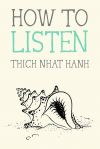
How to Listen by Thich Nhat Hanh. This small book, in volume and in size, is uplifting and practical. It is part of the Mindfulness Essentials Series. Other books include: How to Focus, How to Connect, How to See, How to Relax, How to Love. I keep one of these little gems in my purse most days, perfect reading for those times when you’re waiting for an appointment, riding on public transportation, or just looking for some moments of hope and inspiration.
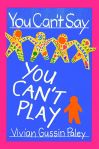 You Can’t Say You Can’t Play by Vivian Gussin Paley, Pulitzer-prize winner author, and former kindergarten teacher is important reading regardless of the learners or grade you teach or department you lead. I read this book years ago, then reread it because its message and key questions are crucial for education today: “What is fair?” and “Who decides?” Paley tells the story of addressing those two questions through promoting ongoing conversation, persuasion, and giving her young students a strong voice in the decision-making process. Eventually, all the children come to adopt Paley’s suggested rule as their classroom rule: “You can’t say you can’t play.” That is, inclusion and caring eventually become the modus operandi of life in the classroom and, also, in the school.
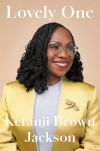 In Lovely One by Ketanji Brown Jackson, the newest Supreme Court Justice and the first Black woman to hold that position, tells the story of her life up to the time of her appointment to the High Court. While the first part of the book is slow moving, stick with it as once Ketanji meets her husband-to-be, Patrick Jackson, at Harvard University where they were both students, her story and her writing are riveting. The dichotomy between their family histories over generations is an American story—Ketanji’s which includes enslavement and segregation of Black people and Patrick’s, which includes White privilege dating back to arrival in the New World on the Mayflower. The union of these two diverse and loving families is a beautiful model for acceptance and determination to live in a more peaceful, respectful, and kind world. Ketanji’s accounts of struggle as a working mother and wife, her long road to becoming a judge and justice, and the many personal stories she tells with heart and humility make this book a compelling, fascinating read. Most of all, I was/am impacted by the rigorous requirements and commitment--including but not limited to many years of study, mentorship, civil service, and practicing law--that precede becoming a judge or justice. I kept wishing similar high standards and requirements applied to our most significant government jobs and appointments, including those running for the highest offices in our country.
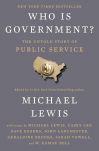 Who is Government? The Untold Story of Public Service by Michael Lewis, ed. These essays, most of which are wonderfully crafted by award winning writers, illuminate the unheralded work of our federal employees, those public servants who work on our behalf not only to ensure our government systems and agencies operate as intended but who also, often through their diligence and unrelenting commitment to serve the common good, identify and improve some of the biggest problems we face in daily living. Simply put, these federal workers keep necessary services functioning well to make our lives better. Such services are related to--but not limited to--maintaining and improving working conditions, safety concerns, medical challenges, and financial equity. This is an enlightening and apolitical book and is especially significant since the recent eviscerating of many of our essential, federal agencies. Our civil service workers deserve our respect, recognition, and celebration for making the everyday functions of our lives possible. A well-functioning democracy depends on the good, steady work our government workers do.
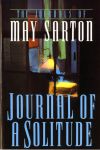 The title, Journal of a Solitude, by acclaimed writer May Sarton caught my attention while browsing at my local, independent bookstore. With all the uncertainty in the world, I was curious about a woman who took one year off from her regular routines to embrace solitude and reflection and record her activity-and lack of it- along with her innermost feelings. It all sounded intriguing, especially as I was struggling—like so many of us--to live a meaningful life in tumultuous times. In that one year in the early 1970’s, May Sarton wonderfully chronicles her struggles (keeping up an old house, bouts of illness, severe weather, dealing with depression) and her joys (picking and arranging fresh flowers from her garden, embracing friends and neighbors, her relationships with her cats), but many days she is alone--often without being lonely. She uses her time of solitude and reflection as a spiritual journey to re-assess and re-value her life. A contemplative, thoughtful book.
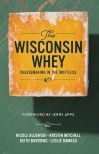 The Wisconsin Whey: Cheesemaking in the Driftless by Nicole Bujewski, Kristen Mitchell, Keigh Burrows, and Leslie Damaso was sent to me by my esteemed colleague and friend, Matt Renwick. Matt lives in Wisconsin, the state which produces more cheese—including many award winners--and has more licensed cheesemakers than any other state. I include the book here, not just because the process is fascinating, but mostly because of the admirable culture of cheesemaking in Wisconsin-- the collaboration, comraderie, and co-operation between and among the many cheesemakers. I found reading about that big-hearted, generous process to be gratifying and reassuring. The cheesemakers willingly share their recipes, processes, and secrets of cheesemaking with each other, and that includes those who are new to the craft. The generosity and kindness of these cheesemakers serve as a welcome antidote to the proliferation of news stories that center on greed, cruelty, and selfishness.
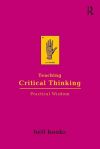 Teaching Critical Thinking: Practical Wisdom by bell hooks is a salve on the wound for what is happening to public education. Especially with the ingestion of AI into all aspects of teaching, learning, and assessment, bell’s wisdom is a gift. In this final book of her teaching trilogy, bell hooks affirms “The heartbeat of critical thinking is the longing to know—to understand how life works.” (p. 7) She is committed to expanding the intelligence of all learners--to helping students learn more (p, 33), to teaching with love and compassion, and to raising students to become self-aware and self-directed learners who are committed to social justice, compassion, and creating an optimal, humanizing environment for all of us. She notes: “Story, especially personal story, is one of those powerful ways to educate, to create community in the classroom. This is especially true as classrooms have become more diverse.” (p. 55. I recommend Teaching Critical Thinking: Practical Wisdom as imperative reading for all educators!
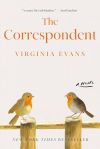 The Correspondent by Virginia Evans is the best fiction book I’ve read in a long while, a story so engaging, captivating, and well written that I plan to read it again. I learned about the book from Cristina Leber, co-owner of the charming, independent Madison Books in Seattle. Another rave comes from Toby Gordon, my book soulmate, dear friend, and former editor. Toby notes “I didn’t know I needed The Correspondent! It’s the perfect novel for these times (and all times) and I’ve already recommended it or bought it for people I love, many times over.” The Correspondent is unique in format; the entire book is comprised solely of personal letters—artfully crafted-- from and to the main character, Sybil Van Antwerp, a woman in her mid 70’s. As Sybil herself says, “I write to anyone that strikes me. Friends, lawmakers, editors, teachers, diplomats, authors. Authors are my favorite.” (p. 122) In fact, she writes to Joan Didion who writes back. As Sybil contemplates the whole of her life--work, family, friends, grief, heartache, memory, joy, and life’s complexities-- she grows in awareness, gratitude, forgiveness, and acceptance. A gem of a book!
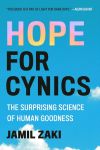 Hope for Cynics: The Surprising Science of Human Goodness by Jamil Zaki is a not-to-be-missed read. While it can be challenging to remain hopeful these days, recovering cynic Jamil Zaki, professor of psychology at Stanford University convincingly presents personal stories and scientific research that demonstrate how empathy, persuasion, and good will can help us resist the cynicism trap and become more hopeful and optimistic. He achieves this goal largely by honoring and validating the brilliant work, thinking, and influence of his closest personal and professional friend—Emile Bruneau-- who lived his life “radically hopeful.” A fascinating book illuminating hope as a powerful force. “. . . hope is a precise, powerful strategy for wellness, harmony, and social change.” (p. 202)
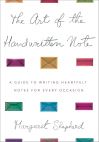 The Art of the Handwritten Note: A Guide to Reclaiming Civilized Communication by Margaret Shepherd. In tidying up my bookshelves, I came across this short book on the importance and joy of handwritten notes and decided to reread it. Published in 2002, it speaks to the power of writing a handwritten note and offers stories, guidelines, examples, and tips for adding more handwritten notes to our correspondence and special occasion greetings. To recognize celebrations, holidays, accomplishments, sad occasions, special friendships and more, I write personal notes on beautiful, blank cards. This is not a chore; I look forward to putting pen to paper and connecting with the recipient in a meaningful, heartfelt manner. I find the slow, thoughtful process one way to offer love, friendship, solace, appreciation, hope, life updates and much more. And no surprise; I love receiving a personally penned note, card, or letter, and I always save these—and often reread them, which feels like a short visit with the writer. As a sidenote, I rarely print out an email or text to save.
If you are a teacher or parent or friend or significant other, consider taking the time to handwrite a short, positive note on lovely paper to someone you know who will appreciate it. I am ending this edition of “What I’m Reading” to write a handwritten and heartfelt thank you card to Matt Renwick, my marvelous tech support guy and close colleague and friend. To whom might you write to today?